


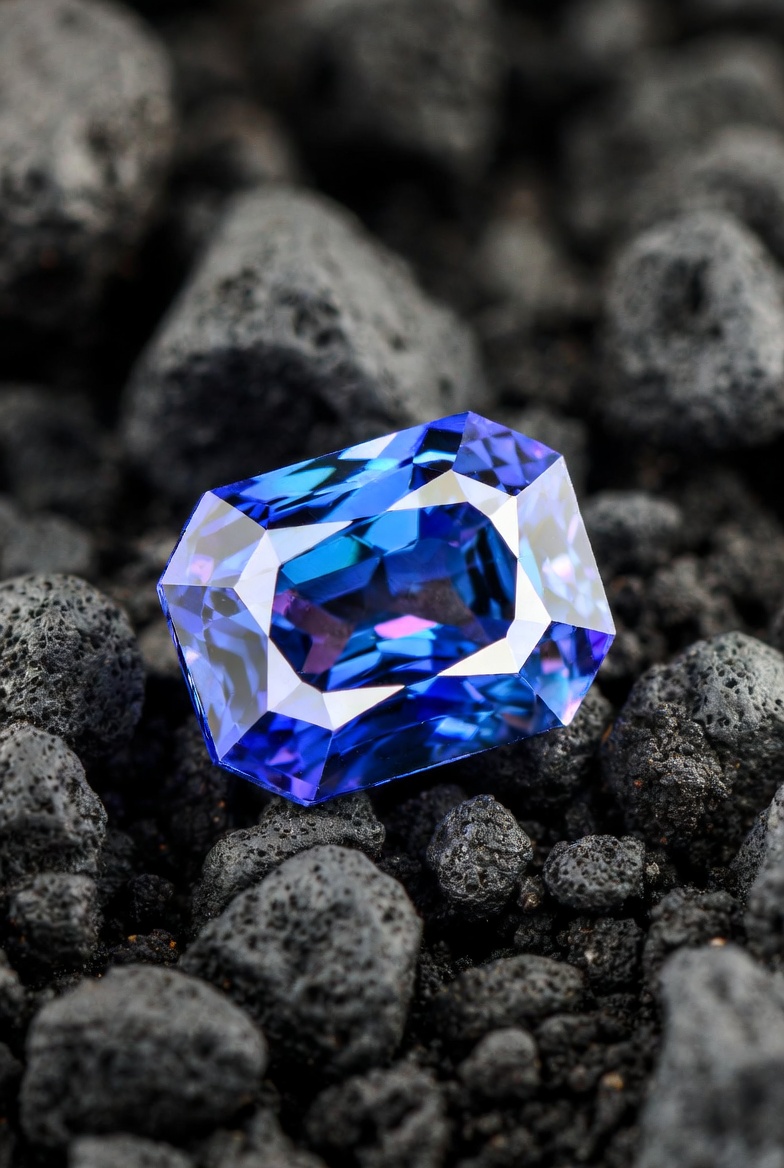
Blue quartz is a type of jewelry stone that is part of the crystal quartz family and appears to have a rather beautiful shade of blue. Blue quartz is a type of quartz which as you can perhaps guess from the name of it exhibits a blue colour. This colouration varies from a light to a dark blue and is in general referred to as caused by inclusions or other micro structures inside the quartz crystal. There are different types of blue quartz, depending on the cause of their colour: As with all permissions, there are varieties of blue quartz that are categorized by the cause of their hue.
Blue Quartz Formation
Blue quartz refers to quartz that have a bluish tint or coloring to them, which makes blue quartz stand out. Depending on the kind of inclusion in the quartz, its formation may occur. Blue quartz with mineral inclusions is generally formed in high temperature and high pressure metamorphic rocks. Dependent on the impregnations of specific ores, namely tourmaline or other minerals, or the overall mineral compositions, blue quartz coloration and formation maybe affected Tourmaline is usually hosted in igneous rocks and pegmatites.
There are factors which determine the formation process of such a type of blue quartz as Siberian Blue Quartz, and it is generally espoused that such type of quartz forms in a specific area of the earth, for instance, the periphery of Lake Baikal in Siberia. The kind of blue quartz is as a result of the geological process of formation as well as the particles that might be present in the mineral.
The quartz as a whole has a formula of SiO₂ and mainly consists of the silicon-oxygen silicon-oxygen tetrahedrally bonded in a nonstop manner. Still it’s the second most credited crustal rock on the earth’s continental crust. There can always be other specific conditions for the formation of the blue quartz but normally the blue quartz is generally found with the other minerals that influence its color through the geological processes.
In fact, there is blue quartz in various categories and they are not exactly the same mainly because their inclusions and mining formation stage are different.
Here are the two main types you’ve mentioned:
1. Chatoyant Blue Quartz:
It is characterized by a shimmering or another term that is used in this connection, cat’s eye effect, which is referred to as chatoyancy.
Chatoyancy is caused by needle like crystals of fibrous minerals like magnesioriebeckite or crocidolite.
These fibrous inclusions reflect the light in a manner where it will resemble the illumination as the angle of viewing alters to give the impression of the light floating above the surface.
2. Milky Blue Quartz:
Nevertheless, milky blue quartz is usually denser and nearly opaque compared to the other types of blue quartz.
Because of that most of the minerals are dispersed within the quartz very finely, which causes the scattering of light and milky appearance.
Inclusions that affect this are major minerals such as rutile or dumortierite that are common in this type of gemstone.
It also results in a deeper blue shade, and this kind of quartz is often alluded to as dumortierite quartz.
Both types of blue quartz can be washed in numerous sites globally and get applied in jewelry and other decorations due to their elegant and unique colors. The specific circumstances of its formation determine the physical characteristics, the frequency of occurrence, and the price of each type.
Blue quartz is a type of quartz, which is valued for its look as well as for other supposed mystical characteristics. Here are some of the key properties associated with blue quartz:Here are some of the key properties associated with blue quartz:
What is Treated blue quartz
Treated blue quartz refers to the mineral called quartz within which natural properties have been altered in an effort to obtain the blue color. While natural blue quartz is rare, there are several methods to treat clear or less desirable colored quartz to turn it blue:Although natural blue quartz is quite rare there are quite a number of ways to treat clear or less attractive blue colored quartz:
1. Heat Treatment: Regardless its root, silica, quartz can in fact be treated with heat in a bid to either sinter the componebt or change color of the component. Still, this method is applied regularly when creating amethyst or citrine out of clear quartz, but not blue.
2. Dyeing: Quartz can be can be dyed almost any color desired that ranges from deep blue to lighter shades of blue. The dye can also be injected through the fractures to the stone through vacuum process.
3. Irradiation: These types of quartz can be bleached by radiation of certain kinds or in other word, alter its colour by effect of certain kinds of rays. This process sometimes assist in the creation of the blue colour, but is more often used in making Smoky Quartz or Amethyst.
4. Coating: In general, other coating processes, for example, vapor deposition can be carried out on quartz to make the quartz take a blue color on its surface. However, a number of these coatings are easily worn out due to time or through frequent and probably severe scrapping or even humping on the switches.
5. Synthetic Production: Siberian Blue Quartz, is not a natural blue quartz, but a synthetic one which is artificially produced to look and perform like a real blue quartz but rather grown in a laboratory. Stones of such a sort are assembled with cobalt or with any other producent of color during the formation of crystals.
The consumers also ought to be acquainted with such treatments because they significantly influence the value of the stone. It is mandatory that every treated stones should be indicated or coded that they are not in their original colour and these stones should be slightly expensive. Customary friends of jewelry and gemstone usually opt for natural setting as they are usually more costly as compared to the enhanced ones. However, there remains the possibility of procuring stones that have been processed to resemble the earlier ones and at the same time will fall within the client’s financial capacity.