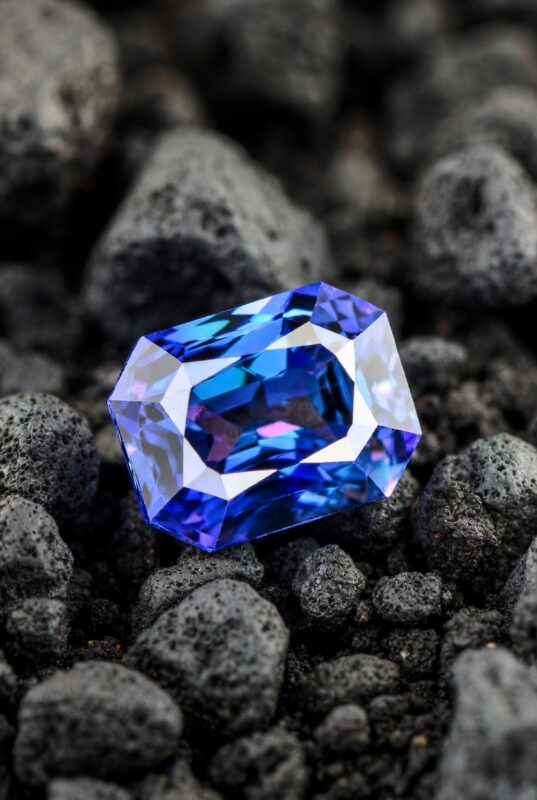
Quartz is a mineral, which is spread throughout the Earth’s crust of today in great proportion. Quartz Crystel chemical compound of silicon and oxygen and it chemical formula SiO2. Quartz is widespread kind of mineral that is located in almost all types of rocks, such as granite, sand, sandstone . They widely utilized in construction where it appears as tiles, countertops, and as the floor. It also plays a role of a raw material in the preparation of glass, ceramic, and in the electronics industry. Also, quartz is very famous gemstone which is most often used in the making of jewelries. Quartz also has the characteristic of crystal structure which is found to be unique for this type of stone. Quartz golem is an idealised hexagonal prism that ends in hexagonal pyramids. These crystals can be clear, white, pink, brown or black in color. The color in quartz depends on the presence of such admixtures as the points of the Bravais lattice within the quartz crystal.
Where is Quartz stone
Silicon dioxide commonly referred to as Quartz is a mineral that can be found in most parts of the world. They are amongst the most widely distributed minerals on the crust of the earth and occur in different environments. Quartz is made up of silicon and oxygen and has some special physical and chemical characteristic. As mentioned it is applied extensively in electronics, construction works, and art industries such as jewelries.
Quartz is present in granite, gneiss, schist, sandstone and many other varieties of rocks. It is also as found in hydrothermal veins and pegmites. Sulfide ore deposits are developed as hydrothermal veins through the circulation of hot water as it injects itself into fractures in rocks and with the process of cooling, the various metal bearing minerals are precipitated. Pegmatites are usually igneous rocks that are formed from magma that has took long time to freeze and has large crystals in it.
Currently, Brazil is among the leading producers of quartz. Currrently, the major application of quartz crystals from Brazil is in telecommunications and other high technology uses. Some of the other countries that have major quartz production includes United States, China and Russia. The United States speaks of deposits of quartz in a number of states these include Arkansas, California, Colorado and North Carolina among others.
Besides mineral sources, quartz can also be produced synthetically, although it is not very common. Synthetic quartz is produced by the reaction of silicon tetrachloride with water; this results in the formation of SiO2 vapor which deposits on a surface. This makes the resulting quartz commonly used in electronic applications mainly due to its purity and the ability to produce large quantities.
In general, quartz is a mineral which is spread worldwide, and it can be analyzed in numerous types of the rocks and structural environments. It is a very useful mineral which finds its utility in numerous applications and has got some very characteristic physical and chemical features. Quartz whether it is obtained from the mines or produced in a chemical plant will remain a significant ingredient in the production processes of many industries for the future.
Physical Properties of Quartz
Here are some of the key physical properties of Quartz: Yes, of course, below are the some of the brief descriptions about the physical properties of Quartz:
Physical Properties Quartz
Crystal System Hexagonal
Colour Clear, white, pink, brown, black, and blue and the rest.
Luster Vitreous
Transparency Transparent to translucent
Cleavage None
Fracture Conchoidal
Mohs Hardness 7
Specific Gravity 2. 65
Streak White
Diaphaneity Transparent to translucent
Refractive Index 1. 544-1. 553 to 1. 545-1. 554
Optical Properties Uniaxial (+)
Solubility Insoluble in water
Melting Point β-tridymite 1670°C
Boiling Point 2230 °C
Thermal Conductivity 7. = 7 W/(m·K) with T_ref = 298 K. 15 K
Chemical Formula SiO2
What is important to note here is that on account of the influence of impurities, quartz can be almost any color.
What are the Applications of Quartz?
It is rather important to mention that quartz is considered one of the most utilitarian natural materials. It is also bound by it physical and chemical properties for it to be useful. It has a Moh scale of 7 hence easilyscratch resistant. The material is relatively non-reactive in response to the presence of many agents and can effectively buffer most reactions. The product is also characterized by electrical conducting, and heat-shock resistant features, which makes it suitable for circuits. The lustre, hue and transparence make it good as a gem and in glass making industries.
Utilisation of quartz in glassmaking
Sometimes, geological processes have for instance placed sediments that are mainly made of quartz with the percentages touching 100 percent. These deposits have been established and used as high purity silica sand especial resources. Such sediments are used in the production of glass. Quartz sand is applied in production of container glass, flat plate glass, specialty glass as well as fiberglass.
Utilisations of Quartz as abrasive
Quartz measures seven on the Mohs scale of mineral hardness, and thus, is harder compared to a majority of other natural materials. Therefore, it can be categorised as an outstanding abrasive material. Quartz grains and silica sand which has been milled very fine is used for blasting with sand, abrasive purpose, grinding media and abrasive grits for sanding and sawing.
Utilisations of Quartz as Foundry Sand
That is, Quartz is chemically and thermally stable. Hence, it is widely employed as foundry grit. With a melting point higher that the most metals, it can be applied for the majority of a common foundry moulds and cores. Because of quartz sand high rigidness it is often employed in making of refractory bricks. Quartz grit is also applied in the fluxing operation, which is used for refining metals.
Utilisation in the Oil Industry
Quartz grain is rather relatively very strong in that it cannot easily be crushed or pulverized. Hydraulic fracture in the case of the petroleum business therefore refers to the situation whereby in an oil and or natural gas well, sand slurry is injected with high pressures. These high pressures fracture the reservoir formations and a sand slurry is pumped into the several fractures. The grainy sand placed in the fractures stay there and are still rigid when the pressure is off and thus can support those particular openings. These exposed fractures let the natural gas to flow freely directly through the well bore.
Other Quartz Sand Applications
Quartz sand is used for fills the rubber, paint and plaster production lines. Cleaned and sized quartz grains are used as filter and abrasive materials as well as roofing granules. Quartz is used in the railways and mining industries for tractions purpose through quartz grains. These sediments are also used recreationally in golf course, volley ball courts, baseball batters’ boxes, children’s sand boxes, and beaches.
Utilisation of Quartz Crystals
Another interesting and very useful feature of quartz crystals is the fact that they can be engineered to oscillate at a particular frequency. Such frequencies are refined that the quartz crystals are applied for making very accurate time keeping devices and instrumentations, transmitting radio and television signals with exact and stable frequencies.
These small devices are called “crystal oscillators. “ The first crystal oscillators were developed in the 1920s and by the World War II, tens of millions of these oscillators were needed for each year for military use. Presently, several billions of quartz crystals are used annually to create oscillators for watches, clocks, radios and televisions, electronic games, computers, mobile phones, electronic metres and GPS equipment.
_optical grade quarz crystals have also been produced for a very wide variety of uses. _ In lasers and optical imaging systems, microscopes and telescopes, electronic sensors as well as other scientific instruments, they are applied for designing of specific lenses, apertures and filters. Today, the most technologically advanced gadgets in the world contains sand.
Is Quartz is Gemstone
Silicon oxide commonly identified as Quartz is one of the most common mineral in the earth and the cuts on the gemstones coloration contribute. Here are some key details about Quartz as a gemstone:The following is the information about Quartz as a gemstone:
Amethyst and Citrine: To-date the two most common Quartz gemstones are Citrine and Amethyst and they are considered the most valuable Quartz gemstones. As for the shades that Amethyst can have, one can mention very dark red and pinkish-violet to grape purple. Citrine Quartz is found in colours that range from very light, almost reaching the translucency of the fruit, through to a deeper golden yellow to a burnt orange brown.
Smoky Quartz: Smoky Quartz is a brown to black Quartz which colour is caused by gamma irradiation and presence of traces of aluminum included into a crystal lattice of a mineral.
Rose Quartz: Rose Quartz is the pink colored Quartz and may differ in hues being from pale pink to pinkish red. The colour is relied conclusively to be due to remains of titanium, iron or manganese present in the large mass.
Rutilated Quartz: Rutilated Quartz is quartz with Rutile ‘threads’ or ‘strands’ running along the framework of Quartz crystal.
Tourmalinated Quartz: Tourmalinated Quartz is Quartz infused with black Tourmaline or Schorl in it and are completely clear.
Blue Quartz: Blue Quartz is very much similar to Quartz but the inside of Blue Quartz contains small blue patches which gives it a pale to medium blue color; Blue Quartz is said to give out calming energy.
Prasiolite (Green Quartz): Prasiolite or Green Quartz or Vermarine is an aesthetic variety of the Quartz group of silicate mineral fostering the chemical composition of silicon dioxide.
All these varieties finds usage in jewelry because they are hard, has no cleavage plane and they produce pleasant impression on the eye of the observer. These are mainly marketed as cabs or cut to fit stones that may be set in rings, necklaces, earrings, and other types of jewelry. Quartz also has its use in carving ornaments, sculptures, figurines and in the creation of numerous kinds of crafts and accessories.

Silica Stone Uses
There are several potential uses for special silica stones:There are several potential uses for special silica stones:
Decorative purposes: Quartz, agate, jasper etc stones are siliceous and hence can be polished and are used as ornamental or jewelry items because of their nice pattern and color. Others are employed in crystal healing practices besides some other features that are spiritual.
Grinding and cutting: Some of the types of silica stones such as flint and chert can be also be employed in cutting and scraping activities through the production of sharp flake through a process referred to as ‘knap’. They were commonly employed this way right from prehistoric period in the manufacture of arrowheads, knives and other tools.
Abrasives: Due to they mineralogical hardness of silica stones such as sandstone and quartzite they are helpful in grinding, smoothing and even polishing other sub-topics. They have been applied in the past especially in honing tools and weapons.
Refractories: Some of the silica stones which have high silica content such as quartzite, cristobalite and tridymite can capability of withstanding high temperatures. Thus, they are applied where high heat is experienced, such as in furnaces, kilns, and other related uses.
Gemstones: Quartz and agate are used in jewelry because of their appearance, jasper and chalcedony are also some kinds of silica stone used in jewelry as gem. They have been applied for this goal throughout thousands of years.
Here are some of the primary possible applications of the special silica stones based on the composition, characteristics and accessibility. The uses normally base them on attributes such as the hardness, heat capability, appearance and prevalence of the various forms of silica stones.
There are a few reasons why synthetic quartz crystals are needed:
1. Purity – This means that other elements that may be present in the natural quartz crystal may affect the performance as well as the properties of the crystal. The source material used in manufacturing of synthetic quartz is so pure that it can be created with minimal impurities and at times the purity of the synthetic quartz can be less than one part per million. This is useful in scenarios, where variations in properties are negligible preferably of the order of zero.
2. Specific properties – But there is a crucial factor which should be highlighted that different natural quartz crystals can have a significant dissimilarities of their properties. For instance, there is synthetic quartz that creates possibility to grow crystalline that has certain features, certain characteristics that can be needed in definite application. The mentioned frequencies of attributes like the resonant frequency, Optical transmission and piezoelectric property can therefore be well controlled.
3. Size – With regard to size some of the applications require big quartz crystals that are not found in nature. Synthetic quartz allow one to cultivate crystals that are much larger than the natural ones available in the market over today. Today, one can build crystals that are one meter in size and this is a clear implication of the fact that crystals today can be synthesized.
4. Shortage – Sometimes it is hard to come across natural quartz crystals having specific characteristics that are necessary for a specific application. Thus, the requirement for quartz crystals for these uses can be fulfilled by the synthetic quartz production.
5. Cost – The synthetic quartz crystals can be manufactured at a cheaper cost from the natural crystals which are requisite to meet similar demands. This is so when considering the large crystals and the ones than can only handle very precise and exacting property requirements.
Therefore, in summary, synthetic quartz crystals are indispensable because, in practice, it is almost impossible to obtain natural quartz appropriate for the standard and optimal requirements concerning purity, feature, size, availability, and cost for many purposes. Flexible production for synthetic production method allows growing of quartz crystals to meet the market demand. This has translate into use of quartz in the electronic, optic, frequency control and the sensors families.
Uses of Quartz Crystal Stone
It has various uses and it mainly focuses at the more common use of this mineral and the other spiritual properties of quartz. Here are some of the key uses:The following are some of uses of this database:
Electronics: Piezoelectricity is used in electronics and Quartz is discovered to be having this property in our structures. This is just a way of stating that they are capable of generating an electric charge upon the mechanical stress being applied to them. Despite the fact that quartz is widely available, it is applied in the production of watches, radios, television, electronic games, computers, cellular phones, electronic meters, and GPS equipment.
Optics: Quartz is used otherwise in the sphere of optics since this crystal is capable of well acting in the capacity of the lens and bending the beams of the light. It is employed in operations of a microscope; in operations of a telescope andin observations of other forms of optical instruments.
Construction: The same Quartz sand also finds its application in rubber, paints, and putties essentially due to its filler property. Synthetic, screened and washed fines are carefully sized quartz filter media for the chemical industry and roofing granules. The ramifications of quartz sands include among others the use in traction for rail road and in the mining industry.
Glass Making: The quartz is among the most useful minerals in the world today With reference to the industrial applicability the mineral has immense application all over the world. Glass which is created from sand which is sharp edged tiny quartz pebbles is a necessity that is familiar to every person.
Jewelry & Gemstones: As has been explained earlier most of the colored quartzes are employed as gem stones as has been detailed above. It can well be cut into various facet gems or carved out into a various figure of a gem.
Metaphysical Uses: It is also for this reason that many men and women also, thus, make use of quartz crystals for metaphysical purposes. These main stones were believed to have healing qualities and can be used for everything: meditating, energy, and even chakra.
Abrasives: Due to the high hardness value of quartz it can be used in abrasive tools or in sandblasting.
Oil & Gas Industry: High purity quartz sand is also used in Hydraulic Fracturing or commonly known as ‘fracking’ a process used in the extraction of oil and barge.
Stone Tools: Then stones were used from the deposits in the form of quartz to make tools, the indigenous Americans, as well as immigrants.
Ceramics and Refractories: Quartz is also used in ceramics and refractories as these kinds of products have capacities for high heat proofing.
Scientific Research: Science some of the uses that quartz has include the geological, chemical and physical uses.