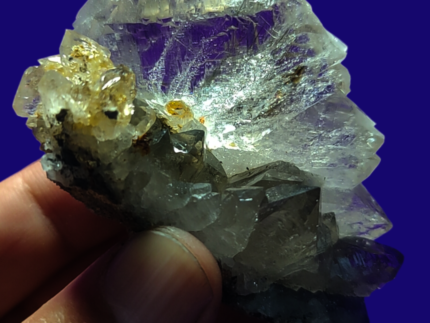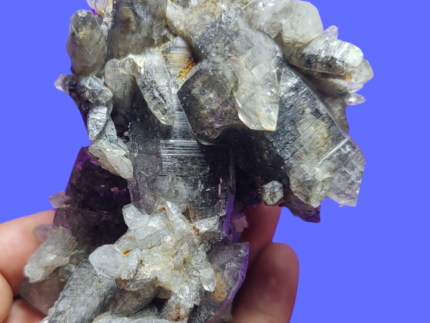


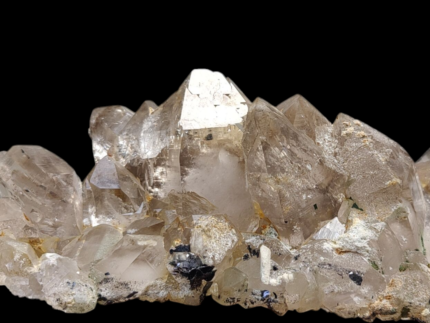
Cabinet Size Specimen Quartz with hematite stone
In the world of mineral collecting, specimens are categorized by size. A cabinet size specimen typically refers to a piece that ranges from 10 to 30 centimeters (4 to 12 inches) in its longest dimension. A large cabinet specimen usually falls on the upper end or even exceeds that range, often being 30 cm+ (12+ inches), and is known for its display value, geological significance, and aesthetic appeal.
Features of Large Cabinet Quartz Clusters
Quartz, being one of the most abundant and diverse minerals on Earth, forms stunning clusters with unique traits depending on the locality. Large quartz clusters often display:
-
Multiple terminated points (clear or milky)
-
High luster and transparency
-
Secondary minerals such as hematite, chlorite, feldspar, calcite, or amethyst phantoms
-
Natural etching, skeletal growth, or twinning
-
Weight ranging from a few kilograms to over 100 kg
-
Aesthetic balance, making them ideal for museums or collectors’ showrooms
Types of Quartz Seen in Large Specimens
| Quartz Type | Characteristics | Common Locations |
|---|---|---|
| Clear Rock Crystal | Transparent, lustrous, often perfectly terminated | Arkansas (USA), Brazil, Madagascar |
| Milky Quartz | Opaque white; often large and massive | Switzerland, Pakistan, India |
| Smoky Quartz | Gray to deep brown or black; may be irradiated | Switzerland, Colorado, Brazil |
| Amethyst | Purple, can form in geodes or large cathedral forms | Uruguay, Zambia, Brazil |
| Citrine | Yellow-orange; natural or heat-treated | Brazil, Madagascar |
| Quartz with inclusions | Rutilated, tourmalinated, or chlorite inclusions | Brazil, Pakistan, Russia |
Why Collectors Value Large Quartz Clusters
-
Visual Impact: Their size and crystal clarity make a powerful statement.
-
Scientific Significance: Large clusters help geologists and researchers understand regional geological processes.
-
Spiritual/Energetic Use: Used in crystal healing, Feng Shui, and energy grids.
-
Investment Potential: High-quality, natural clusters appreciate in value over time.
-
Rarity and Locality: Specimens from classic or closed mines increase collectability.
Famous Sources of Large Cabinet Quartz Specimens
-
Pakistan (Skardu, Shigar Valley): Water-clear quartz with excellent termination and associated minerals like aquamarine or fluorite.
-
Brazil (Minas Gerais): Known for massive, transparent clusters and phantom quartz.
-
Herkimer, New York: Doubly terminated “Herkimer diamonds” sometimes in large clusters.
-
Alps (Switzerland/France): Alpine cleft quartz often with chlorite or hematite inclusions.
-
Arkansas, USA: World-class rock crystal clusters, often museum-sized.
How to Identify a High-Quality Large Quartz Cluster
✅ Luster: Brilliant and reflective surface, not dull.
✅ Clarity: Inclusion-free points are more desirable.
✅ Termination: Well-defined terminations on most crystals.
✅ Damage-Free: Chips, dings, or broken tips lower value.
✅ Matrix: Aesthetic presence of base rock or mineral matrix.
✅ Balance and Form: Attractive structure and symmetry for display.
Tips for Buying and Displaying
-
Weight & Handling: Ensure safe placement due to heavy weight.
-
Lighting: Use natural or LED light to highlight luster and transparency.
-
Environment: Avoid humid or dusty spaces; consider acrylic display cases.
-
Authentication: Buy from trusted dealers; ask for locality and origin documentation.
-
Preservation: Avoid water cleaning with iron-stained quartz; use soft brushes.
Conclusion
Large cabinet size quartz clusters are not just geological specimens—they are natural works of art. Whether you’re a collector, interior designer, museum curator, or metaphysical practitioner, these specimens offer lasting value, beauty, and fascination. As demand for natural, ethically sourced mineral specimens grows, acquiring one of these majestic clusters is both a personal treasure and a wise investment.