


Pakistan’s Gemstones: A $450 Billion Treasure Trove that is about to Shine in 2026
Pakistan is a very fascinating gemstones destination in the world and has staffed an exceptional deposit of precious and semi-precious stones which can be compared to the Brazilian, Afghanistan and Colombian. The country produces the finest of emeralds, rubies, aquamarines, topazes, peridotes, tourmalines, spinels, sphenes and other types of quartz, amongst other things, many of which are currently earning international recognition due to their high-quality colour, clarity and size.
Pakistan can be a significant player in the global gem trade and with a calculated amount of in-ground reserves of about 450 billion, it can be considered a powerhouse. However, despite this prosperity, formal exports remain only $5 -6 million per year or a small fraction of what it can be. The government has been making decisive moves to alter this situation as at the start of 2026, with the goal of reaching 1 billion dollars in gemstone sales within a five-year period.
A Rich History Based on Ancient Civilisations
The passion of gemstones in Pakistan dates back to thousands of years ago. The ancient Gandhara and Indus Valley civilisations also have artefacts, which are precious stones in set, demonstrating the high price attached by kings and ordinary people to them.
After the independence in 1947, there was minimal concern in the sector until the Gemstones Corporation of Pakistan was established in 1979 to encourage mining and trade. The institution had existed nearly 20 years before it was liquidated in 1997. The industry has now been facilitated by Trade Development Authority of Pakistan (TDAP) and All-Pakistan Commercial Exporters Association of Rough and Un-Grooved Precious and Semi-Precious Stones (APCEA).
The best known event in the country is the Pakistan Gems and Mineral Show held in Peshawar annually since 1994 which though has not yet succeeded in attracting any major international customer in the United States and Europe.
Peshawar — The Centre of Pakistan’s Gem Trade
The porous border that exists between Pakistan and Afghanistan, 2,430 km long, has ensured that it is the source of not only Afghanistan gems, but also Pakistan gems. The rough and cut gems market shifted to the main market in the north-western city of Peshawar after the Soviet invasion into Afghanistan in 1979 and the old port city of Karachi became redundant.
Namak Mandi in Peshawar is nowadays one of the most successful trading centres in Asia of gems, a busy place where Afghani, Uzbek, Tajik and other gem dealers meet day by day. Everything including Pakistani stones that were locally produced to Afghan imports are taken care of in the market making it an important component of the global supply chain.

Pakistan’s World Class Gemstones
Emerald
Swat Valley produces deep green, highly transparent emeralds to rival stones from Colombia.
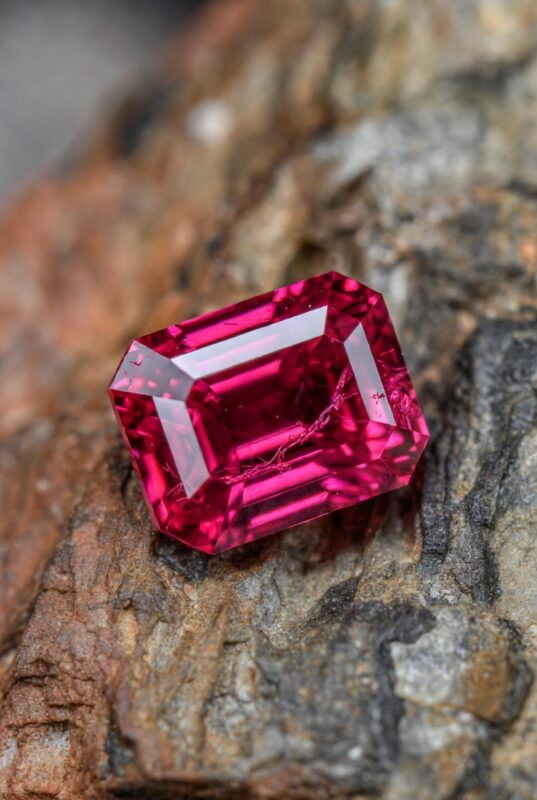
Ruby
Hunza Valley produces rich red rubies of excellent clarity.
Aquamarine
Gilgit-Baltistan is known for large, sea-blue crystals.
 Topaz
Golden, champagne, pink, and violet varieties from Katlang and Skardu are in great demand.
Peridot
Kohistan’s olive-green peridots are some of the best in the world.
Other Major Gemstones
Tourmaline, Spinel, Sphene, Morganite — Found in abundance in the northern areas.
 Rare Quartz
Faden, phantom, rutile included and astrophyllite from tribal areas.
Recent updates for 2026 have led to promising new discoveries, such as emerald in Shigar and ruby in Azad Kashmir, adding optimism for the sector.
Major Mining Areas of Pakistan
Khyber Pakhtunkhwa (North-West Frontier Province)
Swat (Malakand)
Emerald, quartz, epidote
Dir (Malakand)
Corundum, quartz
Mansehra (Hazara)
Corundum, smoky quartz
 Kohistan (Hazara)
Peridot
Peshawar District
Quartz astrophyllite, xenotime, bastnaesite
Federally Administered Tribal Areas
Mohmand Agency
Emerald, clinozoisite, sphene, epidote
Bajaur Agency
Emerald, garnet, orange scapolite
Khyber Agency
Quartz with astrophyllite fibres, xenotime, bastnasite
North & South Waziristan
Faden quartz, phantom quartz, chlorite engaged quartz
Northern Areas (Gilgit and Baltistan)
Chilas (Diamer)
Diopside, zircon, rutile quartz, aquamarine, tourmaline
Gilgit, Hunza, Shigar
Aquamarine, topaz (golden/white), emerald, ruby, morganite, apatite, spinel
Shigar Valley (Skardu Road)
Aquamarine, topaz, tourmaline, spiophyly, sphene, morganite
Braldu, Bashu, Karma
Tourmaline, Aquamarine, Garnet, diopside, Ruby, Emerald, Amethyst
Balochistan
Kharan
Brookite, anatase, and quartz
Chaman (near Quetta)
Diamond quartz, faden quartz, quartz on prehnite
Challenges and the Way Forward
The Pakistani mining remains mostly carried out by local communities through informal (and, in most cases, unsafe) mining methods blasting and digging by small groups of people without any official permission. This translates to low quality products, devastation of the environment and loss of revenues through smuggling.
2026 is a turning point because the government has had a hard time regulating the sector in the past. The new National Gemstones Policy contains:
Key Policy Measures
Capacity & Infrastructure
Centers of Excellence for training
Quality Assurance
Internationally-recognized testing laboratories
Branding & Certification
Certification to building “Brand Pakistan”
Investment Promotion
Incentives for foreign investments
Prime Minister Shehbaz Sharif has set a clear goal, $1 billion in annual exports by 2030.
Why Gemstones Of Pakistan Have Huge Potential
Pakistan would easily compete with Brazil or Colombia with the modern technology, better governance and international relations. The raw material is already present in the country what it requires is investment, infrastructure and marketing in the external world.
To a collector, jeweller or an investor, there is no substitute to Pakistan gemstones as far as value and beauty are concerned. The history of ancient mountains and unexploited opportunity runs in the history of these stones, which trace their story in the legend of Swat emeralds to the golden topaz of Skardu.