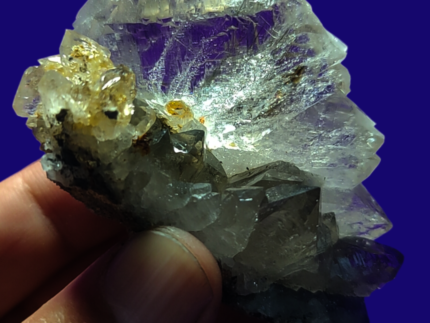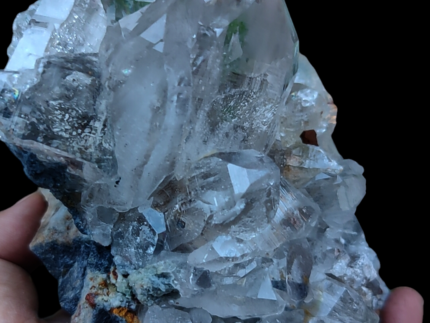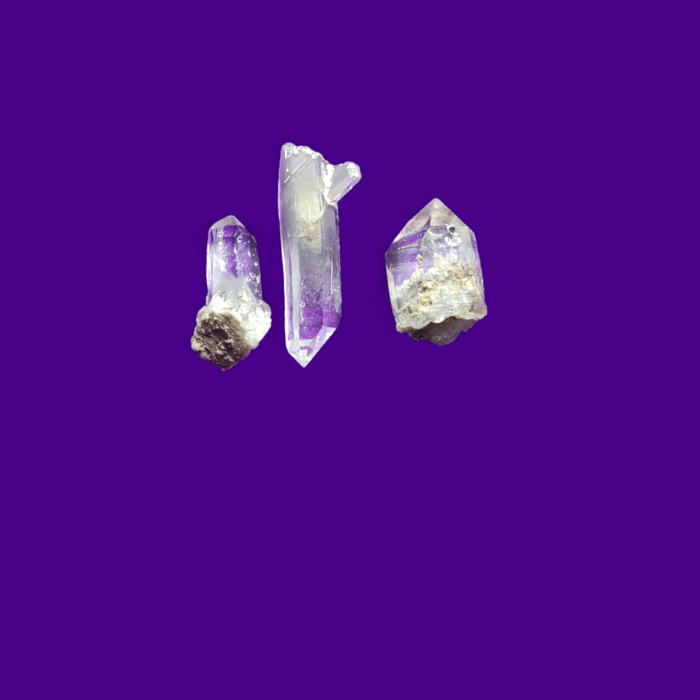

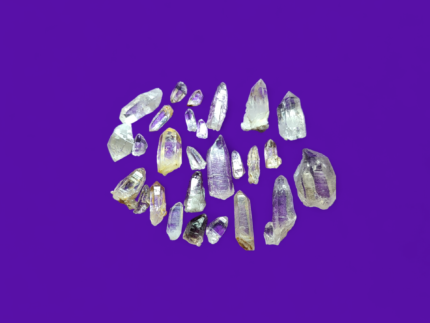

An inclusion not frequently found in quartz entails the existence of unique or odd materials that maybe lodged within a quartz crystal matrix as it crystallizes. Inclusions are most gorgeous and fascinating and their presence can boost the value and demand of the specific quartz specimen by a great deal. Some rare types of inclusions in quartz crystals include:
1. Rutile Inclusions: Needles of rutile (titanium oxide), so fine as to resemble hair, which can grow within the quartz, which may then give the crystal a golden or metallic, silvery appearance.
2. Tourmaline Inclusions: Needles or small grains of black or green tourmaline within the quartz; the effect is even more dramatic.
3. Lepidocrocite Inclusions: Red, orange or brown iron hydroxide crystals found as flakes or inclusions in the quartz giving it a fiery appearance.
4. Chlorite Inclusions: Tiny brownish, greenish resident inclusions which are mostly found in quartz and cause the crystal to look like it came from the forest.
5. Hematite Inclusions: Red or brown hematitic corrections of plate-like shape within quartz often imparting to the crystal a reddish tint.
6. Petroleum Inclusions: Oil globules of liquid hydrocarbons enclosed in quartz, occasionally containing small gas bubbles capable of movement inside the inclusion.
7. Cacoxenite Inclusions: Bronze or brownish needlelike inclusions in quartz that form a type of starlike figure.
8. Phantom Quartz: This appears when one set of quartz growths is included inside the other as a negative imprint of the formation of the crystal.
These inclusions make the Quartz distinctive and beautiful giving the metaphysical and esthetic desire for collectors and people interested in Crystals.
Garnet with Microcline, Quartz and tourmaline combine Specimen mix lot